
Marketing for the New Generation
(And why your marketing team was built for a world that no longer exists)
Here's a quick test. Does every new initiative at your company still start with a campaign brief? Is budget the opening conversation rather than the closing one? Do creators get looped in after the strategy is already locked? Does every trend require a sign-off before anyone is allowed to touch it? If most of those landed, the issue isn't capability. It's the structure you're operating inside. Those processes weren't designed to move culture, they were designed to manage liability. And right now, those two things are pulling in opposite directions.
The Rules Changed. The Org Charts Didn't.
The old internet rewarded scale. Pour enough money into distribution and you could manufacture relevance from scratch. Budget was the moat. That era is over. The new internet rewards timing and cultural fluency. Distribution is now earned by understanding what a community already cares about and showing up there before anyone else does. The brands winning now aren't the ones with the biggest media budgets. They're the ones who understood the room first. That shift creates a problem for teams built to execute planned campaigns on predictable timelines. Culture doesn't run on campaign calendars. And by the time the approval comes through, the moment is already gone.
Ryanair Turned Their Worst Asset Into Their Best One
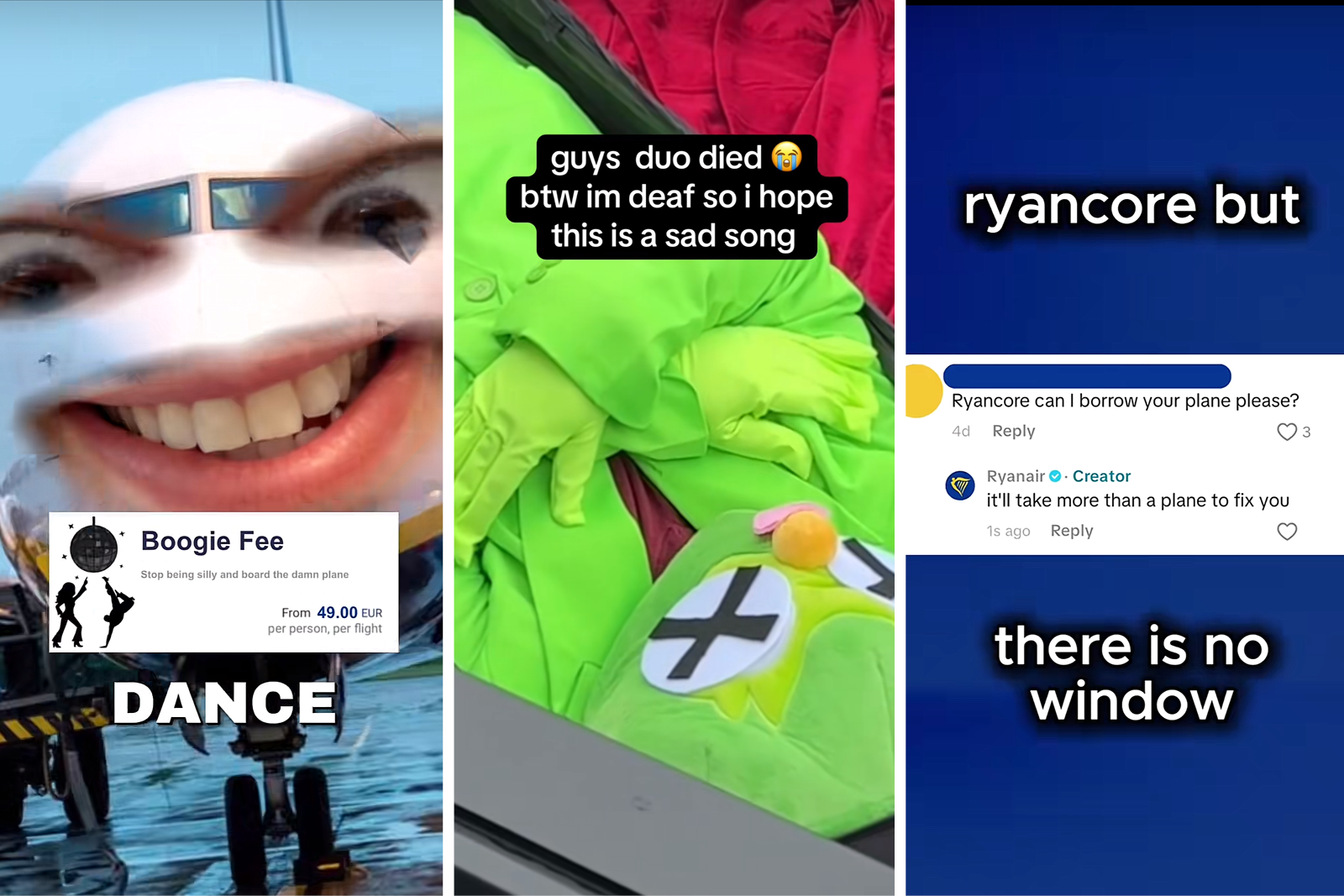
Ryanair is not a beloved brand. They're Europe's largest budget airline, synonymous with hidden fees, cramped seating, and customer complaints that never seem to go anywhere. For most companies, that reputation would be a crisis communications problem. Ryanair made it their content strategy. When they joined TikTok in May 2020, their early posts were unremarkable. But within their first few videos, something shifted: they started posting compilations of their own negative comments, highlighting the passenger complaints, the frustration, the snark, with a wheeze-laugh audio clip playing over the top. The brand was laughing directly at itself, and at the people mad at it. Then came the plane with someone's eyes and mouth superimposed onto the fuselage. Their third version of that format hit 8.8 million views. They knew they were onto something. What followed was a masterclass in knowing your audience and refusing to pretend otherwise. Rather than managing their reputation, Ryanair leaned into every complaint, joking about legroom, mocking passengers for complaining about flights "no one forced them to book," and building a comment section so sharp and consistent that people started engaging just to see what they'd say back. Their social team eventually split into two units: one for planned content, and one entirely dedicated to reactive community engagement. They started monitoring Twitter and Reddit for emerging moments and responding in real time. Corcoran, then Ryanair's head of social, described their philosophy plainly: the brand lives and breathes low cost, and their communications strategy reflects that. Low cost, high reach, built on being reactive and talked about. Within six months, the brand was already reporting incremental growth from the strategy. Within a year, impressions had jumped by over 20 million per week. The instinct that made it work wasn't cleverness, it was honesty. Ryanair understood exactly what people thought of them, stopped fighting it, and turned the perception into the product. No committee would have greenlit that strategy. That's precisely the point.
Duolingo Didn't Follow the Playbook. They Wrote It.
Duolingo did the same thing on a different playing field, and then kept going until they'd built something no competitor could replicate. When a 23-year-old recent hire named Zaria Parvez revived the brand's dormant TikTok account in 2021, Duolingo's CEO was openly skeptical of the platform's potential. Parvez started making content that felt native to TikTok rather than imported from a brand playbook, leaning into Duo the Owl's mildly threatening notification persona, turning the memes people were already making about the app into fuel for new content. The character started developing lore: a fixation on pop star Dua Lipa, a passive-aggressive streak, an unhinged energy that felt less like a brand account and more like a person you followed for the chaos. Duolingo's approach has since inspired a wave of imitators (Jack in the Box, Planters, Pop-Tarts) all adopting their own versions of the unhinged mascot playbook. But by then, Duolingo had already moved on to something bigger. In February 2025, they killed Duo. What started as a planned app icon update (the cartoon owl appearing with X's over his eyes) turned into the most viral brand campaign in Duolingo's history when the first post generated more engagement than anything they'd ever seen. The team scrapped their original plan and built an entire narrative around it. A fake press release announced his death. A video revealed the cause: he'd been hit by a Cybertruck. The post racked up 144 million views on X. Dua Lipa even posted her condolences organically, generating another 22 million views. Brands from Walmart to Netflix to the Empire State Building piled into the comments. Duolingo had built a character so specific and so beloved that when they staged his death, the internet held a funeral. In two weeks, the Dead Duo campaign generated 1.7 billion impressions across Duolingo's social channels –twice as much social conversation as any of the Super Bowl ads that had aired just days earlier. Android downloads jumped 38% the day after the campaign launched. Web searches for Duolingo increased 58%. Then, two weeks later, Duo came back, and the users who'd been completing lessons to earn his resurrection had already handed Duolingo its most active quarter ever. That's not a campaign. That's a character with continuity, an audience with investment, and a team trusted enough to execute at the speed the moment required.
Which Leads Us to the Talent Gap Nobody is Talking About
This is where most brands are quietly losing ground. Not on strategy, not on budget, but on people. The marketer who's exceptional at campaign management and brand safety review is genuinely valuable. But that person is not the same person who sees a cultural moment forming six weeks before it peaks. Those are different skills. Different instincts. Different ways of paying attention to the world. Most marketing teams are stacked almost entirely with the first kind. The brands winning right now are actively hiring the second. What does that hire look like? Subculture insiders. Editors who understand how content travels. Internet-native creators. People who read comment sections the way analysts read earnings reports. Duolingo's senior social media manager has said the comment section is the team's social brief. That's not a quirky one-liner, it's a completely different orientation toward where creative direction comes from. These aren't hires meant to replace traditional marketers. They're hires meant to do what traditional marketers were never trained to do: understand culture before the moment arrives, and move fast enough to meet it when it does.
The Actual Shift
Marketing used to be a reach problem. Get in front of enough people and revenue follows. That framing, which is still embedded in most legacy team structures, treats attention as something you can buy your way into. The new reality is that attention is earned through understanding, not purchased through volume. Knowing a community exists isn't enough. Knowing what that community is laughing at, building shared language around, responding to before the algorithm catches up (and showing up there first) that's the game now. One is a budget problem. The other is a judgment problem. And no amount of spend closes a judgment gap. The brands that win the next decade won't outspend anyone. They'll out-understand them. The question for your team isn't whether you have the budget to compete. It's whether you have the right people, the right trust, and the right instincts to move when the moment arrives. Because by the time the approval comes through, the moment is already gone.
HOW A2L CREATIVE CAN HELP
At A2L Creative, we work with founders, executives, and growing businesses to build social media presences that drive real outcomes. Whether it's your personal brand or your company's, we handle the strategy, the content, and the day-to-day management so you can stay focused on what you do best.
Personal Brand Management For founders, CEOs, and professionals who want to own their space online. Our packages range from establishing a polished, consistent digital presence to full thought leadership positioning, ghostwritten content, deep tone-matching, and the kind of category authority that turns followers into opportunities.
Business Brand Management For companies focused on growth and market share. From consistent organic social for small-to-mid businesses to full-scale, always-on content engines for scaling brands. We build the kind of presence that compounds over time.
Whether you're starting from scratch or leveling up what you've already built, we'd love to talk about what's possible.
Ready to show up online in a way that actually works for your business? Get in touch with A2L Creative today.